
Choose Living Room Colours According to Space Characteristics (Infographic)
July 25, 2016
Priority One Coatings Brings the First Infographic Onsite
Decorating your home is about much more than simply picking out shades you like. It requires a keen sense of what colours work well together, and an understanding of the mood you are trying to create in the room. When deciding on the paint colours for a living room, you also need to think about the setting, where the natural light is coming from, how much of it there is, and the furniture you will be using alongside the walls.
Below you will find a quick visual guide with a few tips to help you through the process when decorating your living room, followed by a closer look at each of the space characteristics worth considering.
Why Living Room Colour Choice Is More Than Personal Taste
A living room is usually the most lived-in space in the house, hosting everything from quiet evenings to family gatherings. That makes colour selection here a little more demanding than in a smaller, single-purpose room. The right shade should suit the room’s size, its light levels, and how it is actually used day to day, rather than being chosen purely because it looked appealing on a swatch or a screen.
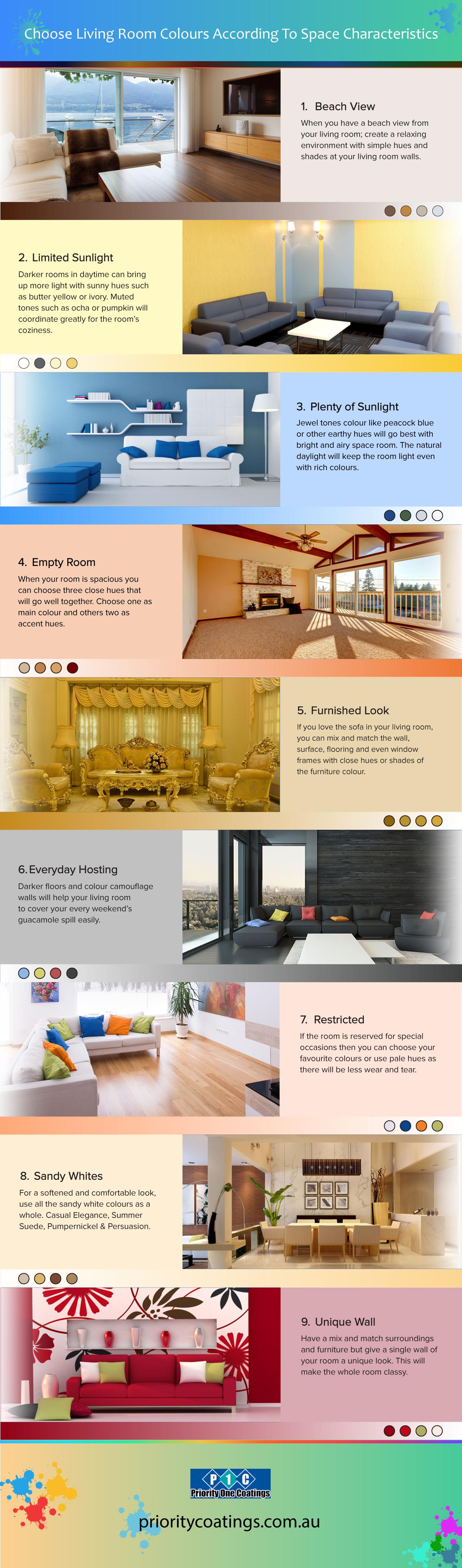
Consider the Direction and Amount of Natural Light
When it comes to getting the best out of your living room, lighting is one of the biggest factors alongside the paint colour itself. The brightness of a painted room varies according to how much natural and artificial lighting reaches it, and paint colours reflect that light to a large extent.
A room that faces north or receives plenty of natural light throughout the day can generally handle a deeper, richer colour without feeling dark or closed in. A room with limited natural light, on the other hand, will usually benefit from lighter, higher reflectance shades that help bounce available light around the space. Our guide on light reflectance value and what it means for your colour choices covers this in more detail if you want to understand exactly how much light a particular colour will reflect before committing to it.
Match Colour to How the Room Is Used
A formal living room used mainly for entertaining guests can often carry a bolder, more statement-making colour than a casual family room used every evening for relaxing in front of the television. Think about how the space is actually used before settling on a shade, and how that colour will feel at the end of a long day rather than just how it looks in a photograph.
If you like the idea of a bold colour but are not ready to commit an entire room to it, our guide to feature wall colour ideas is a good way to introduce a stronger shade in a more controlled way.
Work With the Furniture You Already Have
Paint colour should also complement the furniture and flooring already in the room rather than fight against it. Before choosing a shade, lay out your existing sofas, rugs and artwork and consider the undertones already present in the space. Warm timber floors, for example, tend to sit better with warmer wall colours, while cooler grey furnishings often pair more comfortably with cooler, muted tones.
If you are trying to match an existing colour scheme or unsure how a new shade will sit alongside your furniture, our guide on how to colour match your paint can help you narrow down the right option before you buy.
Keep Ceiling and Trim in Mind Too
A living room’s colour scheme is not only about the wall colour. Ceilings, skirting boards and window trims all contribute to how bright or cosy a room feels once the paint has dried. In smaller or darker living rooms, keeping ceilings and trims a lighter shade than the walls can help the space feel taller and more open. Our article on the best paint colours for dark rooms explores this in more detail if natural light is limited in your living space.
Frequently Asked Questions About Living Room Colours
What is the best colour for a living room with limited natural light?
Lighter shades with a higher light reflectance value generally work best in living rooms with limited natural light, as they help bounce available light around the space rather than absorbing it.
Should ceilings and walls always be the same colour?
Not necessarily. Keeping the ceiling a lighter shade than the walls can help a room feel taller and brighter, particularly in smaller or darker living spaces.
How do I choose a living room colour that matches my furniture?
Consider the undertones in your existing furniture and flooring before choosing a wall colour. Testing paint samples directly against your furnishings is the most reliable way to see how a shade will actually look in the finished room.
Can I use a bold colour in a small living room?
Yes, though it is often more effective as a feature wall rather than across every wall in the room, particularly if the space does not receive a lot of natural light.
Get Professional Help With Your Living Room Colour Scheme
Choosing the right living room colour comes down to understanding your space, not just your personal taste. Considering the light, the furniture and how the room is actually used will help you land on a colour scheme you will still love long after the paint has dried.
Priority One Coatings has been helping Sydney homeowners choose and apply the right colours since 1988. If you would like advice on colour selection for your living room or any other space in your home, contact Priority One Coatings today to discuss your project and request a quote.